

When a patient needs to travel after illness, injury, surgery, hospitalization, or a major change in condition, the right transport decision is not based on distance alone.
Families and care teams are usually trying to answer a more practical question: what transport environment matches the patient’s medical needs, mobility limits, timing, route, and required support during the journey?
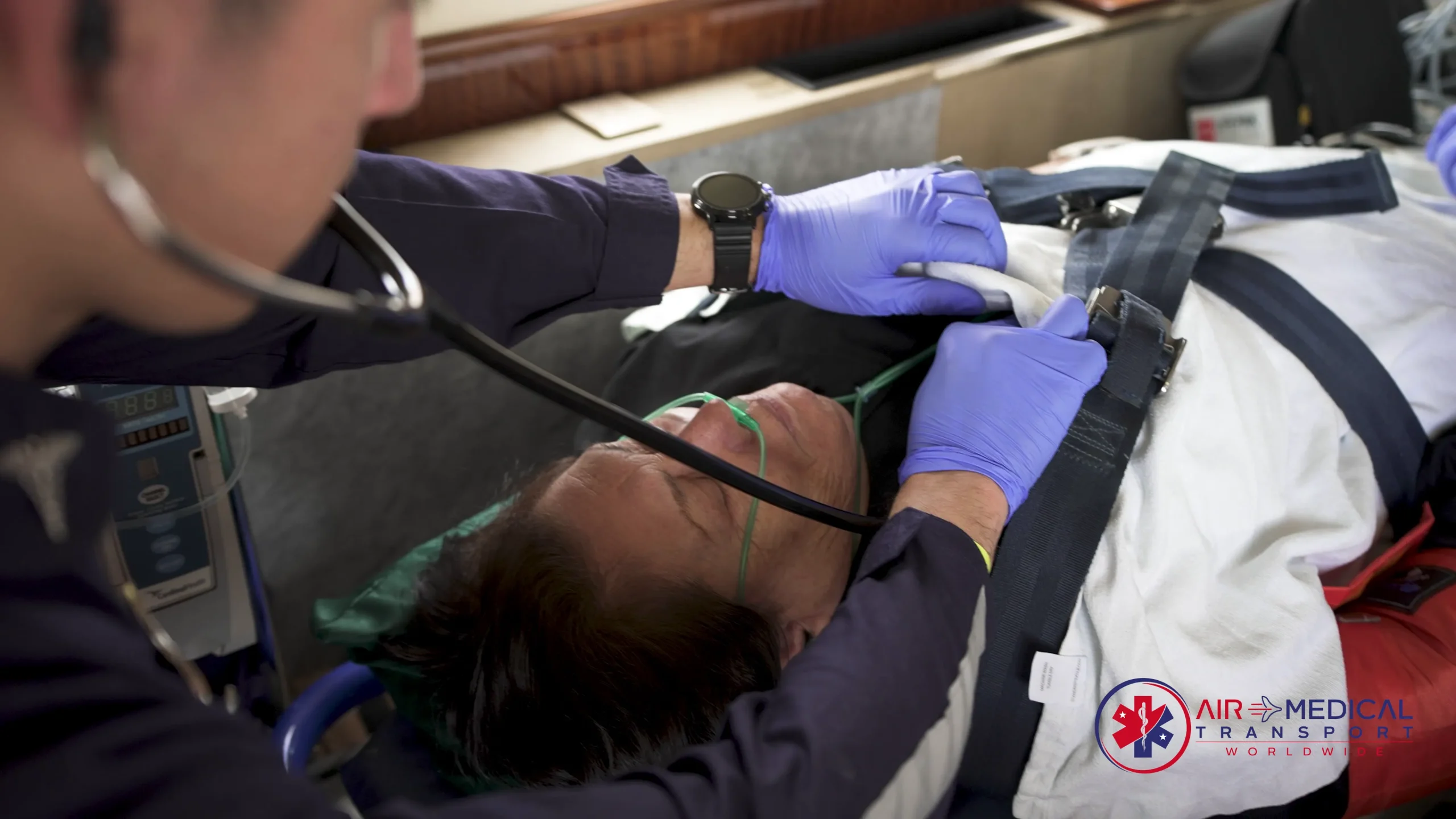
Fixed-wing air ambulance transport may be considered when a patient is stable enough to be moved with treating-team guidance, but the trip requires more medical planning, equipment, patient access, positioning, oxygen support, or bed-to-bed coordination than standard travel can reasonably provide.
Quick Answer
Fixed-wing air ambulance transport may be considered when a patient needs long-distance or international transport and may require oxygen planning, monitoring, stretcher positioning, medical equipment, clinical access, infection-control precautions, or coordinated bed-to-bed logistics during the journey.
The decision should remain guided by the patient’s treating physicians and appropriate care teams. A fixed-wing air ambulance review can help clarify whether a medically configured transport environment should be considered for the patient’s situation.
Why This Question Comes Up
Many patients are not in an emergency, but they are also not well enough for standard commercial travel.
They may be recovering from surgery, leaving a hospital, returning home after illness, transferring to specialty care, relocating closer to family, or needing international repatriation. In those moments, families often hear that the patient is “stable” and assume that means any travel option will work.
Stability is important, but it does not answer the whole transport question. A patient may be medically stable in a hospital bed and still need oxygen support, monitoring, controlled positioning, stretcher transport, medication access, careful transfers, or a planned medical environment during flight.
That is where a fixed-wing air ambulance review may become appropriate.
Situations That May Prompt Review
Fixed-wing air ambulance transport may need review when the patient:
- requires oxygen support or may need oxygen adjustment during flight
- requires monitoring during the journey
- cannot sit upright safely for the full duration of travel
- needs stretcher transport or controlled positioning
- is bed-bound, severely weak, or unable to transfer safely through normal travel steps
- is recovering from major surgery, serious illness, trauma, or hospitalization
- has cardiac, respiratory, neurologic, or hemodynamic risk that requires closer planning
- is immunocompromised, receiving cancer treatment, or needs exposure-risk review
- has a suspected communicable illness or may require isolation precautions
- needs transfer between hospitals, rehabilitation facilities, specialty centers, or countries
- may deteriorate during transport or require clinical access during the trip
These are not automatic approval rules. They are reasons to involve the treating team early and review whether the planned transport environment matches the patient’s condition and the journey ahead.
Why Distance Changes the Planning
Long-distance transport can make small gaps in planning more important.
A patient who can tolerate a short ground transfer may not tolerate a long airport process, multiple transfers, extended sitting, limited mobility, airline oxygen restrictions, or long periods without direct medical access. International or intercontinental travel can add documentation, customs, landing permissions, overflight permits, fuel stops, routing, weather, and country-specific requirements.
When the distance increases, the question becomes whether the patient has the right transport environment from origin to destination, not only whether the patient can begin the trip.
What a Fixed-Wing Air Ambulance Transport Environment Supports
A fixed-wing air ambulance is medically configured for patient transport.
Depending on the case, planning may involve stretcher positioning, oxygen planning, secured medical equipment, monitoring, appropriate power support, direct patient access for the medical team, loading and unloading arrangements, ground transportation when included, and coordination between the sending and receiving facilities.
The specific aircraft, medical team configuration, equipment, route, and timing must align with the patient’s condition, physician guidance, transport distance, airport suitability, documentation, regulatory requirements, and availability at the time of booking.
What Air Medical Transport Reviews
Air Medical Transport provides complete bed-to-bed fixed-wing air ambulance transport management.
Our Flight Coordinator Specialists manage each transport through selected FAA Part 135 and/or EASA-certified fixed-wing air ambulance operators, coordinating transport planning, medical logistics, and regulatory requirements.
Clinical decisions remain with the patient’s treating physicians and appropriate care teams. Our team uses the information provided to review fixed-wing air ambulance options, planning requirements, and clear next steps.
Useful starting information usually includes:
- patient condition and current care setting
- origin and destination
- sending and receiving facility details, if applicable
- physician or care-team guidance
- oxygen, monitoring, equipment, positioning, or isolation needs
- mobility, weight, stretcher, or transfer requirements
- requested timing and any known documentation needs
You do not need every detail to begin. Starting with the information you have can help identify what else is needed for a quote.
In many cases, accurate patient information, sending and receiving facility contact information, and the most recent medical report are enough to begin the review process. If the latest medical report is available, please send it with the request. Otherwise, with appropriate patient authorization and facility cooperation, our Flight Coordinator Specialists can often obtain additional records and information directly from the treating facility as needed.
What This Means for Families and Care Teams
If you are unsure whether fixed-wing air ambulance transport should be considered, that uncertainty is completely understandable. These decisions often happen when the patient, family, and care team are already under pressure.
The goal is not to choose the most complex transport option. The goal is to match the transport environment to the patient’s real needs, avoid preventable gaps, and help everyone understand the next responsible step.
When the patient’s medical needs, distance, positioning, oxygen support, monitoring, or transfer requirements exceed what standard commercial travel can support, a fixed-wing air ambulance review can bring structure to the decision.
What Happens Next
If the patient may need oxygen support, monitoring, stretcher transport, controlled positioning, clinical access, or coordinated bed-to-bed logistics during a long-distance or international trip, begin with a fixed-wing air ambulance review.
Our Flight Coordinator Specialists manage each transport through selected FAA Part 135 and/or EASA-certified fixed-wing air ambulance operators.
For a fuller overview of how transport planning works, review the fixed-wing air ambulance process.
Medical Disclaimer
This content is for informational purposes only and does not replace medical advice. Fitness for air travel should be determined by the patient’s treating medical team.
Reviewer
Reviewed for operational accuracy by:
Xavier Paz
Director / CEO, Air Medical Transport
Review scope:
Fixed-wing air ambulance transport management, medical logistics coordination, aviation coordination, and operational accuracy.
Review date:
August 14, 2026


0 Comments