

Fixed-Wing Air Ambulance Glossary
When fixed-wing air ambulance transport is being considered, clear definitions help families, care teams, and authorized decision-makers understand the process more quickly under time-sensitive conditions.
This glossary explains common fixed-wing air ambulance terms, including transport management, communication, bed-to-bed planning, clinical role boundaries, international planning, and private-pay expectations.
Air Medical Transport provides complete bed-to-bed fixed-wing air ambulance transport management. Our Flight Coordinator Specialists manage each transport through selected FAA Part 135 and/or EASA-certified fixed-wing air ambulance operators.
The patient's physicians guide clinical decisions. Our team uses the information provided to review fixed-wing air ambulance options, planning requirements, and clear next steps. If you are evaluating a patient for fixed-wing air ambulance transport and need clear guidance, our Flight Coordinator Specialists can review the situation and explain what information is needed.
For a step-by-step overview, review the fixed-wing air ambulance process.
Trust, Accountability, and Control
Transportation Management Organization (TMO)
In this glossary, a Transportation Management Organization (TMO) refers to the team responsible for organizing and managing the fixed-wing air ambulance transport process, communication, and logistics, while clinical decisions remain with the patient's physicians.
Air Medical Transport serves in this management role, providing structured transport planning, communication, and logistical support for fixed-wing air ambulance cases.
Why this matters: A clear management structure helps families, facilities, and care teams understand who is organizing the transport process and how communication will be handled.
Single Point of Contact
A Flight Coordinator Specialist who manages communication and transport-planning details from initial inquiry through arrival coordination.
Why this matters: Families and care teams can avoid coordinating multiple transport parties and logistics details independently.
Closed-Loop Communication (Fixed-Wing Air Ambulance)
A communication approach in which key information is shared, confirmed, acknowledged, and documented between involved parties during fixed-wing air ambulance planning and transport.
Why this matters: Confirmed communication helps reduce misunderstandings and supports clearer decision-making when details change.
Continuous Transport Oversight
Ongoing transport-management awareness and communication from planning through completion, including updates on key logistical and operational details as the transport progresses.
Process and Predictability
Complete Bed-to-Bed Fixed-Wing Air Ambulance Transport Management
A structured approach in which fixed-wing air ambulance transport planning may include sending-location coordination, ground transfer planning, review of available fixed-wing air ambulance transport options through selected operators, airport coordination, routing review, receiving-location coordination, and communication with authorized representatives.
Why this matters: Bed-to-bed management helps reduce gaps between facility discharge, ground transfer, flight coordination, receiving-facility arrival, and family communication.
Predictable Execution
A structured planning approach intended to reduce avoidable uncertainty by aligning patient readiness, facility communication, logistics, documentation, payment requirements, and operational availability before a fixed-wing air ambulance transport proceeds. It does not mean timing, availability, routing, or outcomes are guaranteed.
Case-by-Case Assessment
An individualized review of a fixed-wing air ambulance transport based on patient condition, physician guidance, aircraft, flight crew, and medical team availability, routing, weather, documentation, airport suitability, and applicable requirements.
Transport Readiness Verification
A structured review of whether key clinical, documentation, regulatory, payment, and operational elements are aligned before transport scheduling is confirmed.
Clinical and Medical Context
Fit-to-Fly Assessment
A clinical review of whether a patient may be medically appropriate for fixed-wing air ambulance transport under the planned conditions. Clinical decisions remain with the patient's sending, receiving, and treating physicians.
Medical Decision Authority
The authority for diagnosis, treatment, clinical clearance, and fitness for transport. These decisions remain with the patient's sending, receiving, and treating physicians.
Air Medical Transport does not provide medical treatment and does not make clinical decisions. Our team uses medical information provided by authorized parties to support fixed-wing air ambulance transport planning.
Mobile ICU (Fixed-Wing Air Ambulance Context)
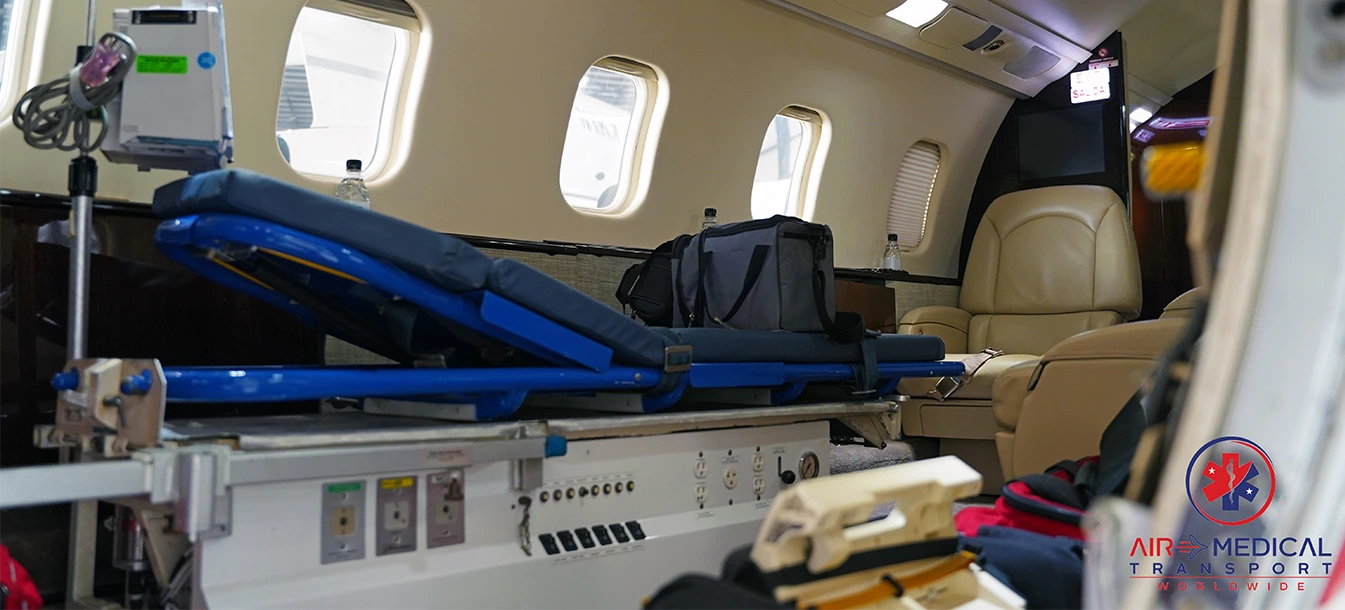
A common shorthand for a medically configured fixed-wing aircraft environment that may support ICU-level monitoring, oxygen, ventilator support, infusion management, suction, and other transport equipment when clinically appropriate and available for the selected transport.
Actual aircraft configuration, equipment, and medical team composition vary by patient condition, routing, aircraft suitability, selected operator resources, and availability at the time of booking.
MICU-Level Monitoring
Medical monitoring and support appropriate for patients who require a higher level of observation or equipment during transport than commercial travel or unmonitored transport can provide.
Sending Facility
The hospital, medical facility, residence, or other approved origin location from which a patient begins a fixed-wing air ambulance transport.
Receiving Facility
The hospital, specialty center, residence, or other approved destination accepting the patient after fixed-wing air ambulance transport.
International and Geographic Scope
International Fixed-Wing Air Ambulance Transport
Fixed-wing air ambulance transport involving movement between countries. International transports may require additional planning for documentation, customs, landing permissions, overflight permits, routing, airport suitability, fuel stops, receiving-facility readiness, and country-specific requirements.
U.S. Domestic Fixed-Wing Air Ambulance Transport
Fixed-wing air ambulance transport within the United States, reviewed based on patient condition, physician guidance, aircraft, flight crew, and medical team availability, routing, weather, airport suitability, ground transfer timing, and overall transport requirements.
Global Transport Scope
Fixed-wing air ambulance transport management within the United States, from and to the United States, and worldwide between international locations when medically and operationally feasible.
Family and Decision Support
Family-Centered Coordination
A communication approach that keeps authorized family members appropriately informed while clinical decisions remain with the patient's physicians and medical care teams.
Decision Support
Clear, non-coercive guidance that helps care teams, authorized representatives, and families understand fixed-wing air ambulance options, required information, likely planning variables, and next steps.
Financial Structure and Expectations
Private-Pay Fixed-Wing Air Ambulance Transport
A fixed-wing air ambulance transport arrangement paid privately according to the quote, agreement, and booking requirements.
Why this matters: Private-pay structure can allow transport planning to proceed without depending on insurance authorization when the responsible party chooses to move forward privately.
Reimbursement Support Documentation
Post-transport documentation, such as a paid receipt and available Patient Care Report, that may support an independent insurance reimbursement submission when applicable.
Reimbursement is not guaranteed. Coverage and claim decisions remain between the patient or responsible party and the insurance carrier.
Moving Forward with Confidence
Structured Next Steps
A clear path for requesting a quote, reviewing fixed-wing air ambulance options, confirming booking requirements, and proceeding when the responsible party is ready.

Need Guidance on a Case Right Now?
If you are evaluating a patient for fixed-wing air ambulance transport and need clear next steps, request a quote so our Flight Coordinator Specialists can review the case details, explain what information is needed, and help clarify practical next steps.