

Fixed-Wing Air Ambulance – Frequently Asked Questions
When a fixed-wing air ambulance may be needed, families and care teams need clear answers, realistic expectations, and calm guidance about what may be required, what information matters, and what happens next.
This FAQ addresses common questions about private-pay fixed-wing air ambulance transport, including medical appropriateness, bed-to-bed planning, international transport, timing, cost, insurance reimbursement, and Air Medical Transport's transport management role.
Air Medical Transport provides complete bed-to-bed fixed-wing air ambulance transport management. Our Flight Coordinator Specialists manage each transport through selected FAA Part 135 and/or EASA-certified fixed-wing air ambulance operators.
For a step-by-step overview, review the fixed-wing air ambulance process.
Fixed-Wing Air Ambulance Questions
What is a fixed-wing air ambulance?
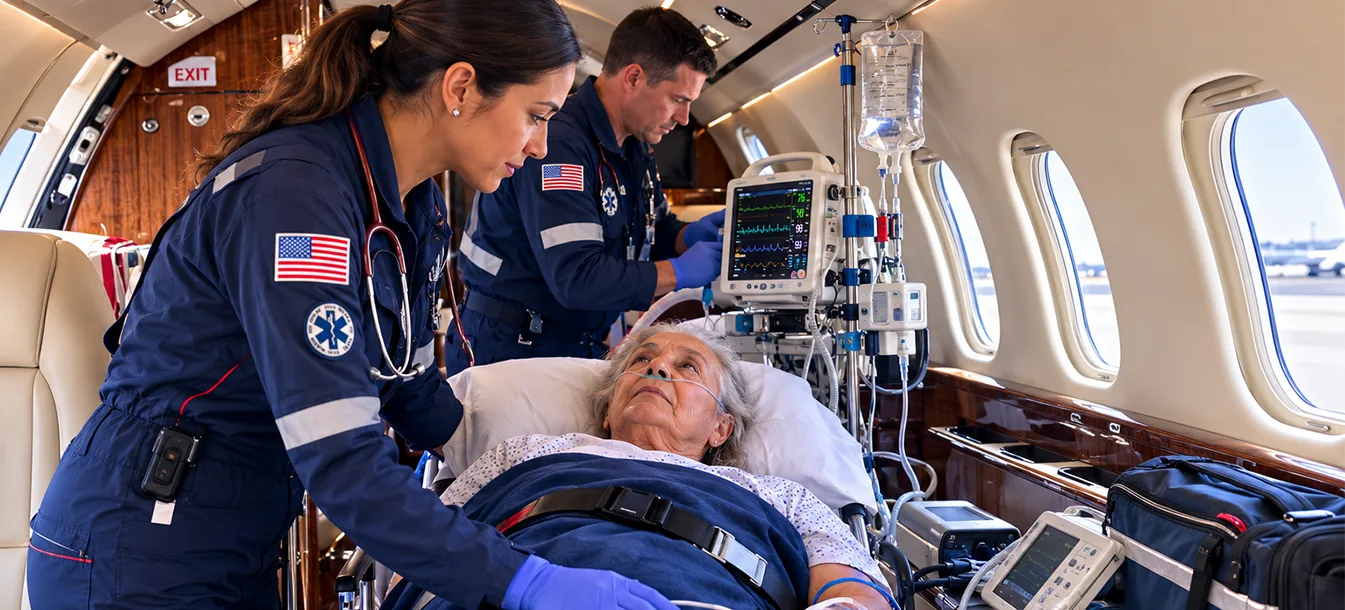
A fixed-wing air ambulance is a medically configured airplane or jet used for patient transport when the distance, destination, or patient condition requires more medical support and planning than commercial travel can provide.
Depending on the case, the aircraft environment may support medical monitoring, oxygen, stretcher transport, ventilator support, medication infusions, and other transport equipment. Actual aircraft configuration, equipment, and medical team composition vary by patient condition, route, operator resources, and availability at the time of booking.
When is a fixed-wing air ambulance medically appropriate?
A fixed-wing air ambulance may be medically appropriate when a patient needs medical monitoring, specialized equipment, or medical team support during long-distance transport and commercial travel or ground transport may not safely or practically meet the patient's needs.
It may also be considered when distance, geography, patient condition, or international movement creates medical or logistical requirements that need structured fixed-wing air ambulance planning.
Each request is reviewed individually. Clinical decisions remain with the patient's sending, receiving, and treating physicians, and transport feasibility depends on patient condition, aircraft, flight crew, and medical team availability, routing, weather, documentation, airport suitability, and applicable requirements.
What is a critical care fixed-wing air ambulance?
A critical care fixed-wing air ambulance supports patients who may require higher-acuity monitoring or intervention during flight.
This may include ventilator support, medication infusions, advanced monitoring, airway support, or other transport resources when clinically appropriate and available for the selected aircraft and medical team. The medical team and equipment plan are reviewed based on the patient's condition and physician guidance.
What does "bed-to-bed" fixed-wing air ambulance transport mean?
Bed-to-bed fixed-wing air ambulance transport means the transport is planned from the sending bedside or approved origin through arrival at the receiving bedside or approved destination.
Air Medical Transport manages the bed-to-bed transport process, which may include sending-facility coordination, ground transfer planning, review of available fixed-wing air ambulance transport options through selected operators, routing review, receiving-facility coordination, and communication with authorized representatives.
Do you handle international fixed-wing air ambulance transports?
Yes. Air Medical Transport manages fixed-wing air ambulance transports within the United States, from and to the United States, and worldwide between international locations when medically and operationally feasible.
International fixed-wing air ambulance transports may require additional planning for documentation, passports or visas when applicable, customs, landing permissions, overflight permits, routing, airport suitability, fuel stops, receiving-facility readiness, and country-specific requirements.
Our Flight Coordinator Specialists help identify the planning requirements and communicate with the appropriate parties so families and care teams do not have to manage each detail alone.
How quickly can a fixed-wing air ambulance be arranged?
Fixed-wing air ambulance timing is transport-specific. Shorter domestic transports may be reviewed more quickly when medical records, patient readiness, receiving-facility acceptance, aircraft, flight crew, medical team, routing, weather, and payment requirements align.
Long-range international or intercontinental transports often require more planning because documentation, customs, permits, clearances, fuel stops, and country-specific requirements may affect scheduling.
When possible, submit requests as far in advance as practical. Shorter timelines can still be reviewed individually, but aircraft, flight crew, medical team, routing, weather, documentation, permits when applicable, and payment completion or credit-card preauthorization requirements may limit scheduling options, especially for long-range international or intercontinental transports.
How do we get started?
Start by submitting a fixed-wing air ambulance quote request or reviewing the air ambulance process page if you need to understand the steps first.
Helpful starting details include the patient's current location, destination, current condition, sending-facility contact, receiving-facility contact, and timing goal.
Our Flight Coordinator Specialists review the information provided, identify planning requirements, and explain clear next steps before booking decisions are made.
Who oversees the transport once it is booked?
Once booking requirements are completed, a dedicated Flight Coordinator Specialist manages fixed-wing air ambulance transport planning, communication, and transport monitoring through arrival coordination.
Families and care teams do not need to coordinate every party independently. Air Medical Transport serves as a single point of contact for transport-management communication, logistical planning, and updates during the process.
Can a family member travel with the patient, and what about luggage?
One companion may be able to travel with the patient when medically and operationally appropriate.
Companion travel depends on the patient's medical needs, required equipment, aircraft configuration, weight and balance considerations, routing, and selected operator requirements. If approved, luggage is usually limited, and any restrictions are explained before transport.
What medical information is required to begin?
To begin review, we typically need a brief clinical summary from the sending facility and contact details for the sending and receiving facilities.
Additional records may be requested depending on the patient's condition, destination, equipment needs, and physician guidance. Our Flight Coordinator Specialists help identify what is needed so the review can proceed with less confusion.
How much does a private-pay fixed-wing air ambulance cost?
Private-pay fixed-wing air ambulance cost depends on the specific transport.
Key factors may include transport distance, routing, available fixed-wing air ambulance options, medical team requirements, equipment needs, international planning requirements, and the patient's clinical condition. Each transport is reviewed and quoted individually, and pricing is explained before booking decisions are made.
Do you accept insurance?
Fixed-wing air ambulance transports are arranged on a private-pay basis.
Booking proceeds after the required agreement and payment or preauthorization steps are completed according to booking requirements. If you choose to seek insurance reimbursement afterward, Air Medical Transport can provide available transport documentation to support an independent reimbursement submission.
Reimbursement is not guaranteed. Coverage and claim decisions remain between the patient or responsible party and the insurance carrier.
Do you operate your own aircraft?
No. Air Medical Transport does not own or operate aircraft.
Our role is fixed-wing air ambulance transport management. Our Flight Coordinator Specialists manage each transport through selected FAA Part 135 and/or EASA-certified fixed-wing air ambulance operators, while clinical decisions remain with the patient's sending, receiving, and treating physicians.

Request a Fixed-Wing Air Ambulance Quote
When a fixed-wing air ambulance is being considered, decisions can carry medical, emotional, logistical, and financial weight. Our role is to bring structure, realistic expectations, and calm guidance to the transport-planning process.