

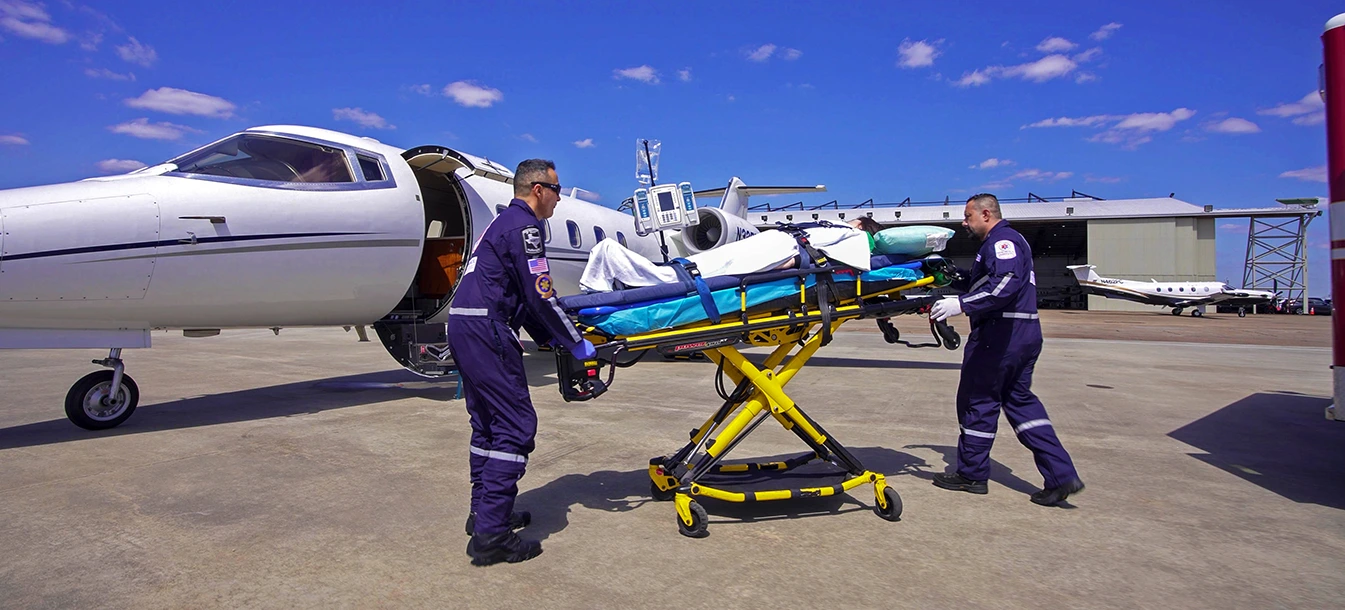
Fixed-Wing Air Ambulance Guidance for Medical Professionals
For physicians, case managers, social workers, discharge planners, international patient liaisons, embassies, consulates, and families acting as authorized decision-makers.
Purpose of This Guide
When a patient may need long-distance, international, or intercontinental fixed-wing air ambulance transport, decisions often involve clinical details, facility coordination, documentation, routing, timing, and family concerns. This guide gives medical professionals and authorized decision-makers a clear framework for evaluating fixed-wing air ambulance transport and knowing what information is needed to move a case forward.
Air Medical Transport provides complete bed-to-bed fixed-wing air ambulance transport management within the United States, from and to the United States, and worldwide between international locations. The goal is to simplify complex transport planning so care teams and families can make informed decisions with less administrative burden and uncertainty.
Understanding Fixed-Wing Air Ambulance Transport
Fixed-wing air ambulance transport may be appropriate when a patient cannot travel by commercial air or ground transport because of clinical risk, transport distance, required monitoring, medical equipment needs, or routing complexity.
A fixed-wing air ambulance is medically configured for patient transport. Transport-specific aircraft selection then depends on patient condition, transport distance, routing, airport suitability, aircraft availability, flight crew availability, medical team availability, and operational requirements. Depending on the case, the transport environment may support stretcher positioning, oxygen, monitoring, ventilator support, infusion management, suction, and other transport equipment when clinically appropriate and available for the selected transport.
Fixed-wing air ambulance transport helps move patients between facilities across long distances or between countries when the case is medically appropriate and operationally feasible.
When to Consider Fixed-Wing Air Ambulance Transport
Fixed-wing air ambulance transport may be considered when a patient requires ICU-level monitoring, stretcher transport, oxygen or ventilator support, specialized equipment, or medical team support during long-distance transport.
It may also be considered when commercial travel is not medically appropriate, when international patient transport is needed, when a receiving facility is ready to accept the patient, or when distance and routing make ground transport impractical. Each case should be reviewed individually with patient condition, physician guidance, facility alignment, and operational requirements in mind.
How Air Medical Transport Manages the Transport Process
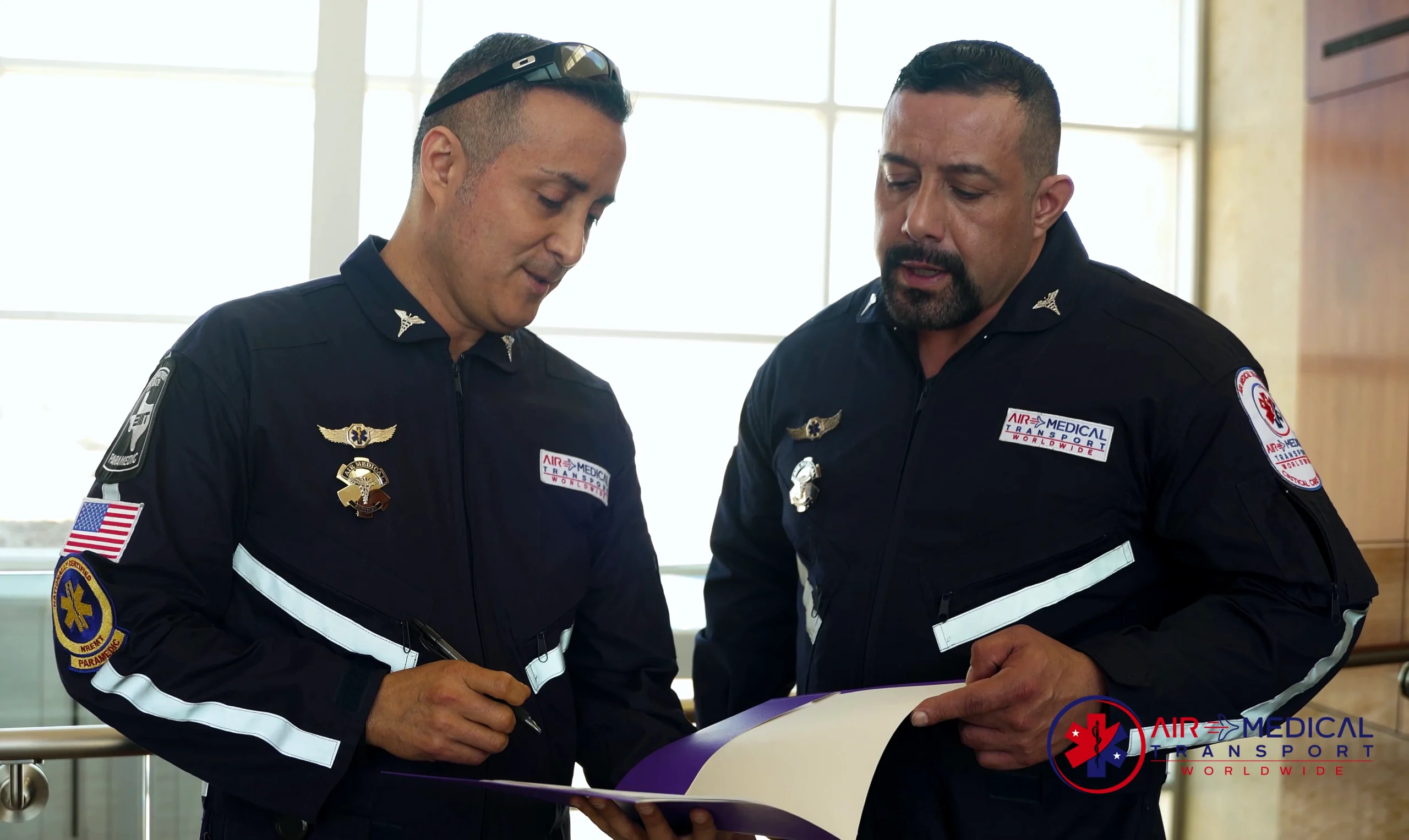
Air Medical Transport provides fixed-wing air ambulance transport management as a Transportation Management Organization. Our Flight Coordinator Specialists manage each transport through selected FAA Part 135 and/or EASA-certified fixed-wing air ambulance operators.
Our role is to organize fixed-wing air ambulance transport planning, align communication between sending and receiving facilities, coordinate logistics, and keep authorized representatives informed throughout the process.
The patient's physicians guide clinical decisions. Our team uses the information provided to review fixed-wing air ambulance options, planning requirements, and clear next steps.
Medical professionals and families do not need to coordinate multiple transport parties or logistics details independently. Air Medical Transport serves as a central point of contact for the transport-planning process.
Complete Bed-to-Bed Fixed-Wing Air Ambulance Transport Management
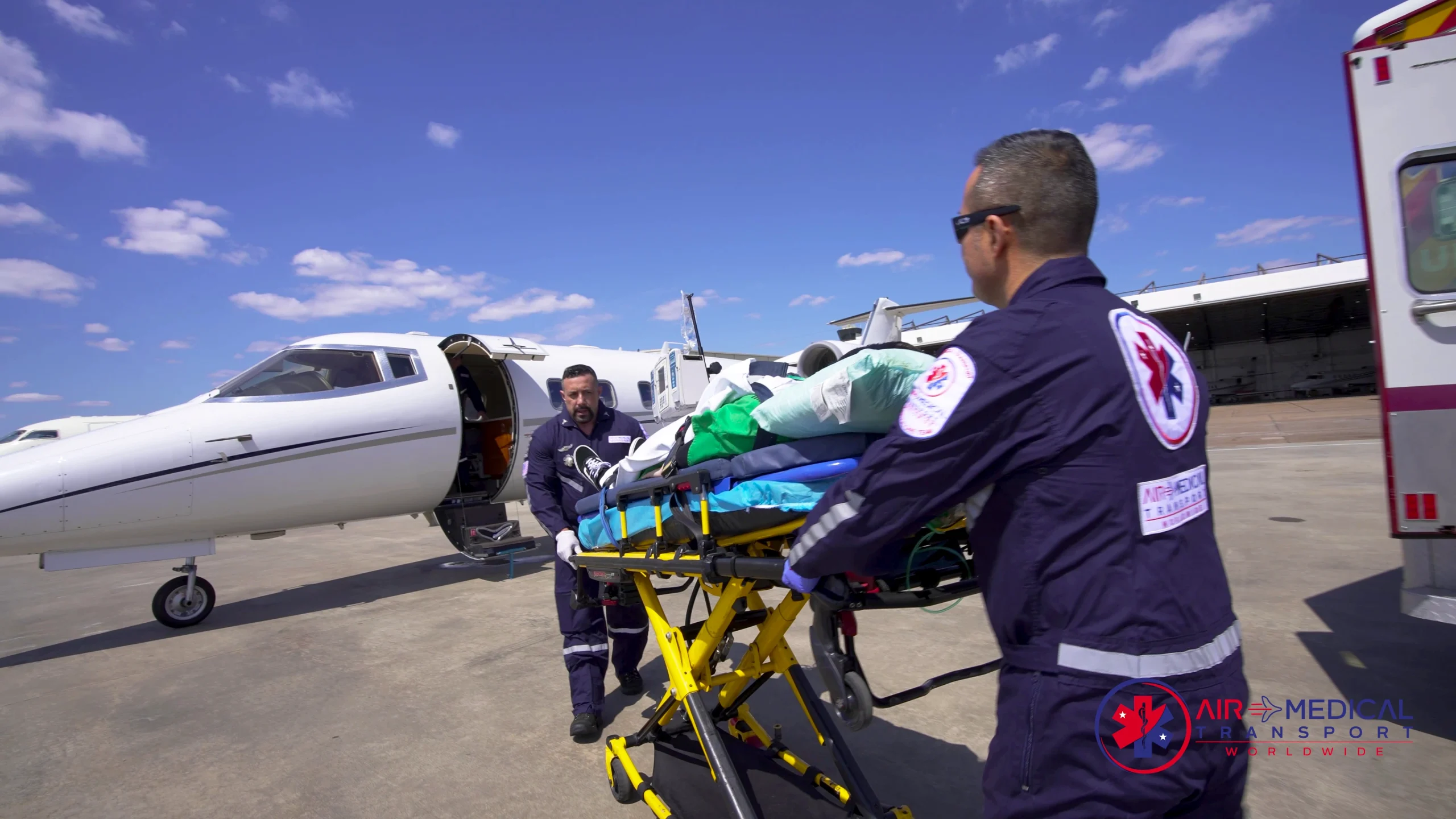
Complete bed-to-bed fixed-wing air ambulance transport management may include case intake, medical information review, sending and receiving facility coordination, aircraft, flight crew, and medical team option review, ground transfer planning, airport coordination, routing review, communication with authorized representatives, and transport monitoring.
Required ground transportation is coordinated through selected providers when applicable so case managers and discharge teams do not have to coordinate separate transport providers independently.
This approach supports continuity, accountability, and clearer communication from the sending location to the receiving destination.
International Fixed-Wing Air Ambulance Transport
International and intercontinental fixed-wing air ambulance transport may require additional planning for documentation, customs, landing permissions, overflight permits, routing, airport suitability, fuel stops, receiving-facility readiness, and country-specific requirements.
Clinical communication is coordinated between sending and receiving facilities, with authorized family representatives included when appropriate.
This structured approach helps reduce uncertainty and identify planning issues earlier during international patient transport while keeping expectations realistic.
U.S. Domestic Fixed-Wing Air Ambulance Transport
For U.S. domestic fixed-wing air ambulance transport, airport selection and routing are reviewed based on patient condition, physician guidance, aircraft, flight crew, and medical team availability, routing, weather, airport suitability, ground transfer timing, and overall transport requirements.
This transport-specific review supports clear planning and helps discharge and case management teams understand what must align before scheduling can be confirmed.
Medical Team and Transport Capabilities
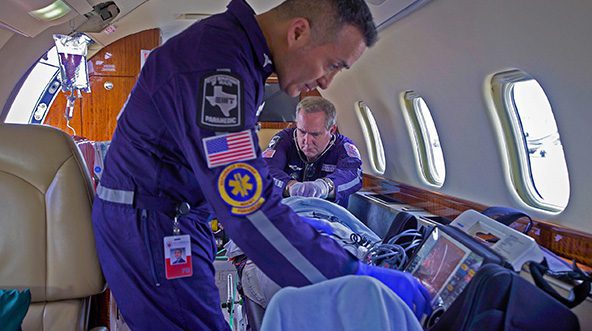
Selected fixed-wing air ambulance aircraft may be configured for adult, pediatric, neonatal, bariatric, and other high-acuity patient transports depending on patient condition, aircraft suitability, medical team availability, routing, and operator resources.
Possible onboard capabilities may include patient monitoring, oxygen delivery, ventilator support, infusion management, suction, and other transport equipment when clinically appropriate and available for the selected transport.
Medical team composition, equipment, and aircraft configuration are transport-specific and depend on patient needs, physician guidance, routing, transport distance, and availability at the time of booking.
Private-Pay Structure and Reimbursement Considerations
Fixed-wing air ambulance transports arranged through Air Medical Transport are private-pay. Bank wire payment instructions are included with every quote. Complete the required payment or the approved preauthorization per the booking requirements. Booking and transport arrangements proceed after the required agreement and payment steps are completed, credited, or properly pre-authorized.
After transport, Air Medical Transport can provide a paid receipt and available Patient Care Report for records or optional reimbursement submission.
Insurance coverage and reimbursement depend on the patient's policy, insurer requirements, medical necessity review, and claim process. Reimbursement is not guaranteed, and any claim decision remains between the patient or responsible party and the insurance carrier.
A Clear, Practical Process for Medical Professionals
The process begins with a request for a quote. General medical, location, timing, and destination details help our Flight Coordinator Specialists review transport feasibility, likely planning requirements, and available fixed-wing air ambulance options.
Based on the information provided, the proposed transport plan, timing considerations, payment requirements, and next steps are explained clearly. If additional clinical or logistical details are needed, a Flight Coordinator Specialist will let you know. If the quote is accepted, booking proceeds according to the required agreement, payment or preauthorization steps, medical documentation, operator review, and availability at the time of booking.
A dedicated Flight Coordinator Specialist remains the primary point of contact and provides structured updates through the transport process.
For a step-by-step overview, review the fixed-wing air ambulance process.
Who This Guide Is Designed For
This guide supports physicians and attending clinicians, case managers and discharge planners, social workers and care coordinators, international patient liaisons, embassies and consulates assisting citizens abroad, and families acting as authorized decision-makers.
It is designed to help medical professionals and families understand what information is needed, what variables may affect transport planning, and when to request a quote for fixed-wing air ambulance transport.

Need Guidance on a Case Right Now?
If you are evaluating a patient now, request a quote so our Flight Coordinator Specialists can review the case details and explain practical next steps.
For additional support, Contact Air Medical Transport.